Showing posts with label death. Show all posts

Sunday, April 26, 2020

Pandemic side effect

My grandmother is in this picture.
Time saps the dead of their relevance. We look back at them with condensation, as dimwitted folks with wrong and odd beliefs in the structure of their own solar system and the causes of natural phenomena now understood by children.
A cousin has traced hers and my earliest known ancestor to a man named Hugh de Luttechwicke. Hugh was born in 1050 and had a daughter named was Mabel. He was French. He probably never saw a structure taller than a church's steeple and would never gone faster than the speed of a good horse, about thirty miles an hour, unless he died from a fall off a cliff. It's likely he was near the top of his society. Most then were farmers and European literacy rates were just around ten percent. Hugh must have done something noteworthy to have his name recorded. Maybe he was a member of the clergy. Maybe he tortured confessions from accused witchws. Maybe both.
My parents died nine years ago. I imagine them coming back, of having dinner with them again on a Sunday evening, and me catching them up on what's happened since they died. Throughout the evening, their mouths are agape, jaws slack with amazement and disbelief. Trump, Brexit, and the current pandemic. They lived through a great depression, a world war, a great recession, the election of the first African American president but events since their deaths have gone backward in time. Building a wall to keep people out? A highly contagious disease with no cure in sight? If I told them a simple procedure that cures all cancers had been discovered, or that proof of intelligent life on a distant planet had been found, they'd be more willing to believe me.
I look a pictures of people my age who died in the Seventies. They were smart, funny, good looking. Now all I can see is the dated clothes and hair styles. I have to remind myself they were people with imagination and many of them would have been far more up on things and involved in them than I am. 

I'll be dead in a few years. (Really, I'm surprised to be alive now, considering my medical history.) Every morning, I write two pages in a journal. I do this for myself but a small part of me thinks one of my niece's or nephew's future children might be curious enough about my life and times to slog through my poor penmanship. (They'd have to go online and look up a tutorial on how to read cursive.) After a few pages of reading me kvetch about slights and my memories of working in a factory when I was in my twenties, they'll get bored, put the journal away intending to look at it later, and forget about it. It and the other ones will end up on the bottom of a box for some years and finally, after a basement flood ruins them or someone gets a decluttering bug, will be tossed.

Tuesday, October 22, 2019

Finding my body

On the third day my neighbor, Jim, is concerned enough by the three newspapers in the driveway that he crosses the street to investigate. He opens the mailbox and sees two days' of mail in it. He looks in the garage and sees that the car is there; I'm not on a trip.
Jim looks into through the kitchen door, which looks through the length of the house's first of its two floors. He's apprehensive as to what he might see and relieved, a little, to see nothing. He rings the doorbell and knocks. Nothing. He thinks of circling the house and looking in other windows but instead he calls Sam, one of my two brothers. John lives nearer and travels outside the area less often than Sam, but Jim knows Sam better and has his number in his phone. He reaches Sam, who thinks of asking him to get the key to the house hidden under a rock and go inside but abandons the idea before he articulates it, knowing it's beyond the scope of a favor to ask a neighbor, however good a friend that neighbor might be.
None of them are hardened to these matters as others would be. Cops, doctors, emergency medical workers. Sam calls 911 and requests a wellness check. A police officer will be there soon, he's told. He tells Jim where the key is and asks him to give it to the officer, and leaves for the house. During the twenty-minute drive to it, he calls John and tells him what's going on, and John too heads for the house.
The police officer arrives before either of them do and enters. His voice booms with an official tone as he states his reason for entering and calling for a response. Jim stands in the driveway and waits for my brothers, relieved he's not obligated to do more than that, glad he isn't faced with the prospect of finding a body, maybe naked and sprawled on a bathroom floor.
Me, 1959.
I'm in bed and I've been dead for two days, my aortic aneurysm having exploded at night, the kind of death I'd hoped for. The cop finds me quickly, led to my bedroom on the first floor by instinct and the smell of death in the house, which is mild at this point—it's cool in the house—but his nose is a practiced one. He puts a blue latex glove on his left hand and checks for a pulse. It's obvious that he won't find one, but he follows procedure. He's certain it's not a crime scene but that's not his call to make so puts on a second glove. Using his portable radio, he call the coroner, then departs to talk to my brothers, who have both arrived and are in the driveway. He delivers the news, waits for it to sink in for a few moments, then tells my brothers, politely, that they will want to move their cars to let other vehicles into the driveway. Jim tells them to park in his driveway.
He walks around the house, looking for broken windows or anything unusual that might have been discarded near it. 
The coroner arrives with an assistant. He checks for a pulse, makes sure my pupils are fixed and dilated, listens for a heartbeat with his stethoscope. The put my body in a bag and zip it up.

Sunday, July 22, 2018

Dead, dead, dead

The three koi I had in a man-made pond died last week. 
It was partly my fault. Although the leg amputation in February and shoulder replacement in May have made getting out to see the pond risky because I'm using a wheelchair and there are two tricky steps involved, I had made the trip and could have kept doing so. If I had, I'd have seen that the power to their water and air pump was out. A friend fed them on Sunday, they were dead on Wednesday. The friend says he thinks the pumps were going, but I doubt that; the fish have survived much longer power outages, even in summer, when working pumps are essential (warm water holds less oxygen than cold water). I should have specifically asked him to check to see if the little waterfall was flowing. 
empty koi pond
Other than things you can't see and some aquatic plants, this is empty.

I also blame the gardeners my brothers hired to clean up the grounds (I admit I was slow to do this, which is why they stepped in and hired people without telling me, but I had planned to make a call that week). They uncovered the outlet to the devices and didn't put the cover back. There was a short but strong storm that Sunday that may have shorted out the power. Also, there was a sheen of oil on the water, which would have blocked oxygen, and I suspect it was runoff from the mulch they used around the pond. 
One of the fish was twenty-five years old and had been around when my parents were alive. The other two I'd bought five years ago. All three had many more years ahead of them. I'd named the three after my brothers and I. It's stupid to give pets names; it makes it harder when they die.
The way the fish died would have been unpleasant. It is a precursor to the way I'll probably die when the form of cancer that required removal of my leg spreads to my lungs. 
They will be my last pets. Ever. I can't have pets because I love them too much and they always die, saddening me for years. The joy they give when alive doesn't outweigh the misery. Once the sadness I feel now ebbs a little, it will be almost nice not to have to worry about anything other than a couple of houseplants. But that ebbing won't be for years, and I probably don't have that long.

Monday, April 23, 2018

The view from my table

This morning, while reading the paper and drinking coffee, I saw three vehicles in succession, about twenty seconds apart, go by. The first was a police car, the second an ambulance, the third another township car of some kind that probably had to do with medical examination. 
All three passed at an unhurried pace with no alarms. Clearly, they were going to remove a body, probably that of an elderly person who had died in his or her house under medical supervision.
chair and shadows

Now chances are good that the remaining person in the house, likely the spouse, will move. The house will be purchased by a developer and torn down. Its replacement will be much larger than the original structure, which is probably a two-story Colonial, but fairly in keeping with the neighborhood, unlike the grotesque stucco mansions common in the late 1990s. It is the way of how things are in this area. The house I live in—my late parents'—is also a "tear down." It was built in 1952. Although my parents made many tasteful improvements like skylights and a family room, it doesn't have a full bathroom for each bedroom and the high ceilings and ample floor space today's house buyers expect.
Today is also one of the two trash collection days here. Cans and bins are at the end of all driveways. Watching workers in large trucks remove refuse on the same day as a body is taken out of a house can lead one to draw an uncomfortable parallel.

Friday, February 23, 2018

I know this, but still ...

I've been trying to get my house and my mind ready for life with one leg instead of the usual two, which will begin next week. I've lived on crutches long enough to have some idea of how to set things up, but now I'm moving to the first floor, into a different room. The room that was my late parents and has stayed much the same since they died six years ago, except for clearing out a lot of their clothes.
My grandfather, who died in 1952, six years before my birth.
I'm taking down some of what they had hanging up and putting up some things I like. Paintings by artists friends of mine, for example. Other things from elsewhere in the house. 

I'm doing the practical things too, of course. My clothes, bathroom things. A friend told me that keeping busy with these things would help me cope with it all, but I'm not finding that to be true. I need breaks now and then, and those involve going out to buy food items that keep.
Through all this, I realize how childish and selfish I'm being. I think of the slaughtered children in Florida and what their parents are enduring and I realize that my feelings about losing one leg are laughable. Any one of those parents—and people who loved similar victims everywhere—would be overjoyed if they could have the deceased returned to them with no legs or even arms at all. 

Tuesday, January 30, 2018

When it's you

The death of a grandparent, graduation from high school, first love, things you did that caused extreme embarrassment, guilt, anger, joy. 
From the time you're young—the age can vary widely from one person to another—there's a part of you that does more than just experience significant events. There's a part of you that considers how your future self will use what you're learning from them. It happens almost as the event is occurring, or immediately afterward.
We never really know how we'll be when we're older, but we do know that what we do now will have an effect on that person, even though he or she may not exist for ten, twenty, even fifty years from the present. We know that we're learning or have already learned something, and that it will change us and guide our behavior in the years stretching ahead.
two boys 1960
My brothers, some time around 1960.

I've been thinking about this with my recent highly likely terminal diagnosis in mind. I'm learning new things daily, seeing things in different ways. But for what? I'm making mistakes, but the mistakes are about things that will never happen again. And even if you believe in an afterlife of some kind (I do not), the form that afterlife would take wouldn't be one that you can use anything you learn in your last months in a practical way. Passing along what I've learned to others? People have been doing that better than I ever could for millennia. As much as I would have loved to, I never married or had children.
Nearly sixty, what I'm learning now won't change me in any fundamental ways. Am I being nicer to friends, relatives, people I encounter in daily life? Perhaps, a little, but I've always been a pretty nice guy. The time to ask yourself who you will be when you die is when you're twenty.
The only thing I can think of doing is to go quietly, without disrupting the lives of those around me, which in my case is my two brothers and their wives. Histrionics won't do them any good. 
I want to draw my last breath in some physical comfort but in even more mental comfort. Dying alone in a hospital bed, during a night shift with doctors and nurses padding quietly up and down sterile halls, everyone I know asleep, will be fine.

Sunday, December 24, 2017

Hating the young

You young people, with your healthy bodies and, worse, decades of time before you, time that will bring bad things to the planet and everything living on it, but time that will also see innovations that will extend your lives to as far as human life can go, a not agreed on figure but a figure that may reach a century-and-a-half by the time you arrive there. Time that will cure conditions like the one I have, which will soon take my leg and then, very likely, my life.
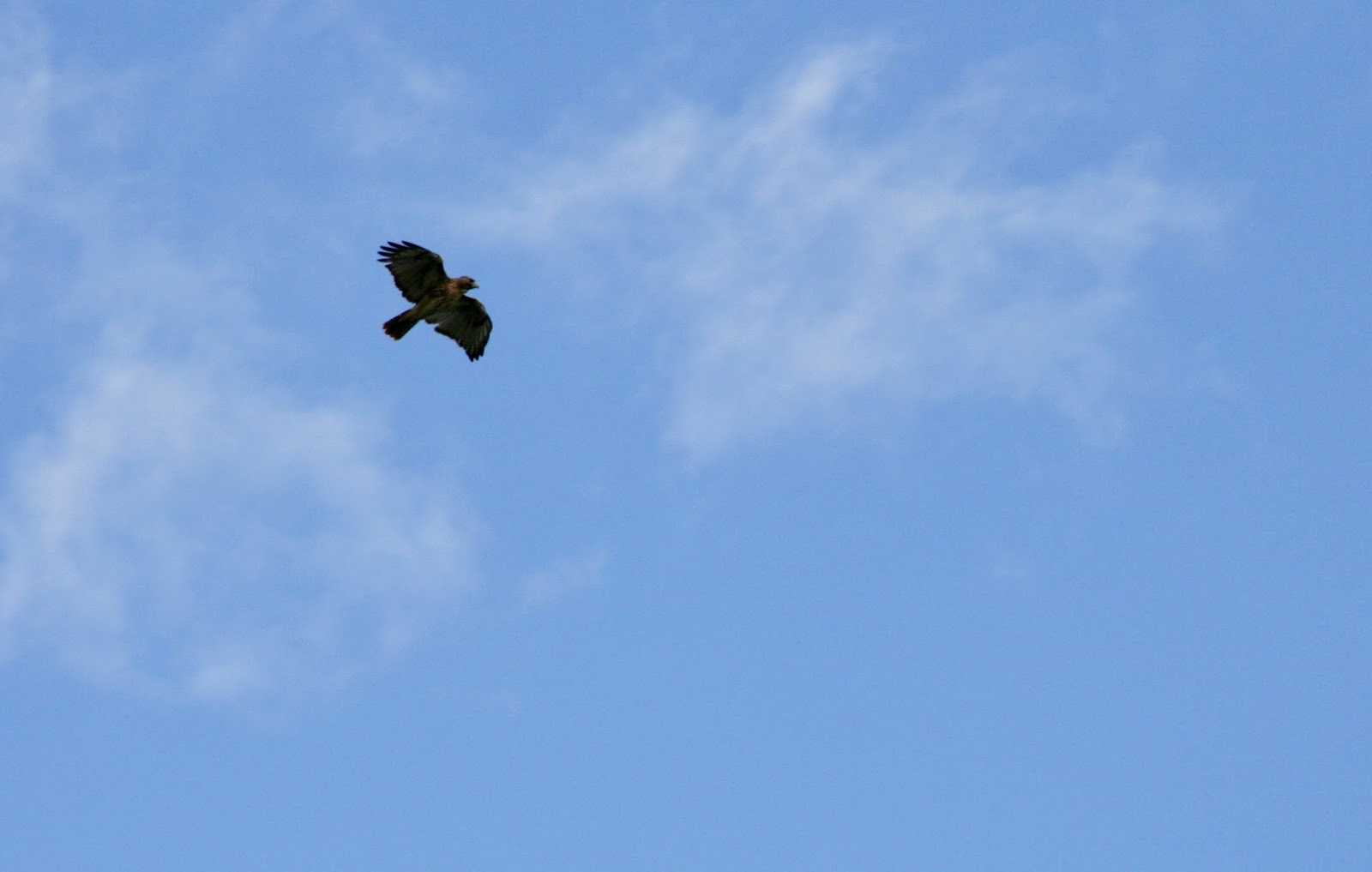
hawk flying
A hawk soars overhead.

Humankind is on the cusp of this. The gloom we see now, particularly in the United States, will prove to be a blip, an aberration. Americans will come to their senses and again invest in their nation's future and extend its beneficence to all around the world.
It's awful to know you're going to die during a political and cultural downturn, but as death approaches that will take a place far down the ladder of my concerns.

Friday, July 14, 2017

Sudden death

The mother of a friend of the Complete and Total Loser's died on an operating table Monday. It was unexpected. True, she was older—in her 70s—and the operation was on her heart, but it wasn't supposed to be life threatening. She was fine the day before and, her daughter told the Loser, only having the procedure now because if she'd waited longer she'd have to have many tests redone.
operationg room
An operating room.

The Loser texted his friend, the daughter, late in the morning of the operation to ask how things were going and to say he knew how waiting around hospitals was an unpleasant way to spend one's time. She texted back that there had been bleeding and complications and that they were to tell her more in about half an hour. 
That was the last he heard that day until a mutual friend called him that afternoon to say she'd heard the patient died.
The mother, whose name was Linda, was one of the rare parent of a friend whom the Loser had thought of as his friend too, even though he only saw her two or three times a year. The Loser had emailed her the afternoon before the operation saying he hoped all would go as well as he was sure it would and that the two of them should go on a long walk together in the coming fall to celebrate their rehabilitation (the Loser had a knee replaced a month ago). She wrote back: "It's a date!"
The Loser has mixed feelings about dying on an operating room table. The pros are that you're asleep and numb and unaware that you're dying. If you can't die while committing an act of heroism, dying in your sleep is the best way to go. The cons are, of course, that you are dead, and you never got the chance to say goodbye to those you love or take in a sunset knowing it will, not may, be your last. You can't even eat breakfast that day.

Friday, May 5, 2017

The binary test

Tomorrow, the Complete and Total Loser will have a chest CT. If it finds something, the Loser will die. If it doesn't, the Loser will still die, but not right away; he'll die when he's supposed to, like everyone else.
There is no treatment for what the test may find. The best the Loser could do, his doctor told him, is to see if anyone is doing trials for it, which is unlikely as it's a rare disease.
Ah, life.
sky cloud trees
It is nearly definite that this is the most beautiful planet anyone you'll ever know will ever see.

Wednesday, January 18, 2017

Sally died

The Complete and Total Loser reads the death notices in his local paper every day. Today, he learned that a woman who was a year behind him in college died. Her name was Sally.
The Loser was stunned. 
He went to her house in 1976 because her parents were holding an event for area high school seniors to learn more about the college, which is in Ohio, far from the Loser's suburban Philadelphia town. Sally's father went to the college and Sally would have been there but the Loser doesn't recall meeting her at that time.
He met her when he was a sophomore and she a freshman. The college was (and is still) a small one and kids from the same regions tended to find one another quickly even if they'd never met in high school. Sally was pretty, funny, smart and talented. She sang in the school's female a Capella group.

The Loser went to an all-boys school, Sally to an all-girls one. A clear memory the Loser has is of talking to Sally about his senior year prom (only seniors at these small private school had proms), which he did not attend because being a loser, he knew no girls, and never went to social events in high school. Sally told him she'd gone with a classmate of the Loser's named Frank.
Frank and the Loser had been childhood friends, largely because they lived in easy walking distance from one another. The boys were very different, though, and Frank and the Loser were merely acquaintances from third grade on. 
Sally said she found Frank terribly dull and didn't enjoy the evening.
"Then why did you go with him?" the Loser said.
Sally looked puzzled by the question. 
"He asked me," she said. "I'd have gone with you if you'd asked me."
The Loser was taken aback. He imagined himself at the prom, with Sally. He couldn't dance, but he'd sit around and talk with her, they'd make jokes, he'd tell her how nice she looked. He'd introduce her to teachers and feel almost like a normal boy. 
She moved back and settled in the area after college. The Loser lived elsewhere for the next nine years. After he'd returned, he'd heard from a mutual friend that Sally hadn't married even though she'd wanted to very much. She kept her looks; the Loser saw her on television once as she was participating in a fund drive. She knew how to talk to men and had boyfriends in college who were invariably handsome, nice young men the Loser thought well of.
Although he never felt well enough about himself to get in touch with her, somehow the Loser always thought he'd see Sally again and perhaps even become friends.
It's too late now.

Tuesday, December 13, 2016

The last to die

mother and baby in doctor's office
A mother and her baby wait in doctor's office.
The Complete and Total Loser's aunt died yesterday. It was not a surprise: she turned one hundred years old in September. She was the oldest of five siblings, the Loser's mother being the youngest, and the last to die.
Her death solidifies the Loser's standing as the older generation in his family, even though just one cousin is younger than he is. He thinks of the thoughts and speculations he had of his mother and father's generation when he was young (What was it like to be twenty when the Japanese invaded Pearl Harbor? What did they think the year 2000 would be like? What diseases did they worry about? What was it like to have only radio and print to tell you about the world?) and wonders what his nieces and nephews think of his own generation. 
Actually, is unlikely they think much of him at all. He never married, had children or even had a long-term relationship and never had an interesting job. There are more interesting and successful people in the Loser's family tree for them to contemplate.

Saturday, October 11, 2014

October, again

It is raw, the weather in the Complete and Total Loser's East Coast town. Mid fifties and damp. The shortening of the days is accelerating. Vegetation is decaying, insects are frantic. Dead squirrels and raccoons dot the roads and highways as they focus more on storing fat for winter than approaching cars. 
And again, the anniversaries of his parents' deaths, which occurred just 50 days apart in 2011, approaches.
woman with dog

Sunday, July 27, 2014

His friend's mother died

The Complete and Total Loser's friend's mother died this morning. Very sad, but the Loser never met her. He's sorrier for his friend than for his dead mother. 
She died of lung cancer after smoking for decades. Just a coincidence, probably. 
Yesterday the Loser went to a Hallmark store in search of a sympathy card. They're awful. Trite, stupid messages. He couldn't find blank ones. He did in another store a few years ago. Advice: If you ever find a simple sympathy card, like one that just says "Sympathy" on the outside and is blank inside, by a handful of them and put them someplace where they'll be easy to find. 
The Loser settled on a set of cards that simply had the initial of his last name on the outside and were blank inside. In other words, not a sympathy card. His own words will convey that.
sympathy cards

Saturday, July 26, 2014

A friend's mother

"It's a matter of hours now," a friend texted to The Complete and Total Loser about his mother's impending death. 
The Loser has genuine feeling for his friend and his mother, whom he has never met. His sympathy is a little tempered by the fact that she was a smoker and is dying of lung cancer. Also, on some level the Loser, whose own mother and father died in 2011, feels a little glad that what's happening to his friend isn't happening to him.
Love Park Philadelphia
While awful things are happening elsewhere, happy tourists, in this case from Columbia, smile and pose under the Robert Indiana Love sculpture in Philadelphia.

Tuesday, March 19, 2013

The Zen Calendar

Page-a-Day calendars, made by the company of that name, make great gifts, but shop carefully. If you buy one you can register for another online and get it free. This year, the Complete and Total Loser registered for one with Mensa puzzles in it and it's awful: Nothing but word grids. 
The one the Loser likes is the Zen calendar, and he's been getting it for himself and as Christmas gifts for others for over a decade now.
The quotes are not always from those who practice Zen. They can be from artists, musicians, writers, scientists, politicians, business leaders, teachers, actors, religious leaders -- what matters is that in some part of their lives they've stumbled on something that fits with Zen philosophy and put it into words. The best quotes are the short ones, though the long ones are often instructive and worth reading. (A good example of a short quote is the one last Sunday from W.C. Fields: "My wife drove me to drink -- I'm eternally indebted to her.")
One of the Loser's gift recipients was his father, who died in December of 2011. He loved his Zen calendar, the Loser's father. Born in 1920, he was a depression-era kid and he had the mindset of most of his generation. He read the usual books (though he was far more well-versed in Shakespeare than most), the usual newspapers and magazines, did the usual things (married, worked, lived in the suburbs, raised three sons, just one of them a loser), died a normal death, luckily at 91 rather than younger. 
That traditional upbringing and life made the Loser's father regard the Zen calender as a source of messages from an alien civilization. He was often baffled by its missives of non-competition and acceptance.
The Loser's not sure how many years he bought it for his father, but it was enough that when he gave him a gift-wrapped package for Christmas each year his father would say, "Ah! There's my Zen calendar!" in a sincerely excited way. One year the stores were sold out so the Loser gave him a calendar of quotes from the Dali Lama. They weren't as good: accept no substitutes. It was a lost year and from then on the Loser made sure to buy the calendar online by late November.
In October of 2011 the Loser's mother died. In November his father had a stroke. It wasn't, thank goodness, the kind that left a side paralyzed and drooling, but it was a body blow.
When the Loser went online to purchase the calendar, he couldn't help but think: Will Dad see all of it? The best thing to do when you think that kind of thing when you have an ailing loved one is ignore the thought and act as if it never occurred to you. You certainly don't mention it to anyone you know, not when sober, anyway.
The Loser's father didn't live to see page one of the 2012 edition of the Zen calendar and, in fact, didn't know he was getting it, dying December 15th. It could've been assumed, but he had other things on his mind, of course. 
On January first, the Loser opened his calendar (he's good about not cheating with that kind of thing and as a child didn't open the little doors on advent calendars in advance). He stripped off the cover pages to January one and saw what you can see in the photo below. It seemed to say to the Loser: There's no reason to read the rest of this calendar. Take the year off. Cope.
So he did. Now he's back and reading the current edition, though weeks can go by and he'll forget, so he has to catch up sometimes.
The Loser put his Zen calendar photographs of his late parents. It's still there.

Thursday, December 22, 2011

Hard to Believe

The Complete and Total Loser, whose parents died less than two months apart this fall, is finding it hard to grasp at the moment that people can simply die. Cease living. People die all the time and he knows that, and the Loser was present a week ago today when his father took and returned his last breath, but right now it just doesn't seem possible that he'll never be around again. 

Wednesday, December 21, 2011

Appropriate

My father's service will be tomorrow, December 22. This year, that's the shortest day of the year. Perfect timing. It should remind me that the days will lengthen from now on, but I know that there is still a net loss of heat in the norther hemisphere and that many colder days lie ahead.
My mother visits my father after an operation on Christmas Eve, 2010.

Thursday, November 17, 2011

The Other Shoe

An old phrase has been going through The Complete and Total Loser's head since a few days after his mother's death three weeks ago: Waiting for the other shoe to drop.
The phrase is not that old. It's not from the Bible, Chaucer or Shakespeare. It seems more likely, according to the Loser's lazy Internet research, to be from the Vaudeville era and from a boarding house story in which a man drops one shoe noisily, waking his sleep companions, who then brace for the sound of the other shoe. The sound never comes as the man realized the impact of the first so he removes the second shoe with care and puts it quietly on the floor. Time passes. Finally, an irate neighbor shouts for the man to drop the other shoe and get the noise over with.
Earlier this evening the Loser got a phone call from the suburbs from a kind neighbor. His father, age 91 and alone for the first time had fallen. Not too serious, it turns out (he called for an ambulance himself), but he'll stay in a hospital overnight. He's taking medication for shingles and other things and not eating as well as he should. 
The Loser, after consulting with his brothers about their father's condition, will go to the house after work tomorrow and spend the night. It looks now like the Loser will move in to the house sooner rather than later unless his father rebounds enough from his grief to eat right.
The phrase refers to waiting for the inevitable, waiting to get something unpleasant over with so one can continue as before. It's a cheery phrase because it implies that the unpleasant thing will happen fast, like ripping off a Band Aid. This is inaccurate, however. The dropping of that second shoe won't happen fast. It will descend toward the grimy boarding house floor as if falling through syrup, yet it will, despite its slow speed, make a jarring bang when it hits.

Wednesday, November 9, 2011

Dying Scene 2: Swabs and Bubbles

She will never eat again. Her choice. Really, looking back, the Complete and Total Loser's mother was eating a minimal amount for months, always with a current excuse.
"My stomach hurts."
That kind of thing. She was wasting away, not that everyone looks strong and thick at 80. She wanted strawberry smoothies and other fluids but barely touched protein, saying her daily Boost, the drink for seniors that has around 300 calories, was adequate.
She will drink, on this morning of last full day of her life. The Loser, at her request, holds a cup of water with a straw to her mouth and she takes a few sips. She still knows who the Loser is, he can tell, but doesn't really acknowledge him directly. By noon she doesn't drink but asks for swabs.
The swabs are little sponges about an inch and a half long by an inch on the end of a plastic stick. You dip them in water and bite on them to release the water or juice on them. They're a safe alternative to crushed ice, the Loser guesses, and you'd never see them outside a hospital.
For hours, the Loser dipped the swabs in a Styrofoam cup of water and puts them in his mother's mouth. She squeezed the swabs between tongue and pallet to get water. Her tongue was dark, almost black. After some dips, the swabs get gunky. The Loser throws them out and opens a new one.
Meanwhile, the Loser's mother wore one of those double plastic tubes in her nose for oxygen. There's a little box on the wall with water in it. The oxygen bubbles through the on its last leg from someplace beyond the wall to his mother's failing lungs. The bubbling is a steady, pleasant sound, soothing, like sounds from his parents' small koi pond.

Wednesday, November 2, 2011

The Loser Writes on a Train

The Complete and Total Loser grabbed a free alternative weekly from a box before the train to the city arrived. He opened it once seated and found he'd read it days before. So he took out the small book with blank pages he'd been using to make notes and to-do lists in over the past week and wrote instead. 

It's been a week. I'm on a train, one of the old ones with dirty, sagging seats, on my way back to the city. I left my second bike at Devon Station. Will it be there and intact on Sunday when I return? Can't say. Don't care. 
A plus to the old trains: No loudspeakers blaring out the stops at ear-splitting decibels due to incompetent microphone use. It's like the old days, the conductor announcing, except the conductor is black.
Two seats in front of me is an African-American man, an albino. Pink skin, white hair. He seems fascinated by what's happening behind him and turns to look often. I don't turn and I hear nothing out of the ordinary. A couple talking. It's a mystery and a little troubling. He is looking beyond me. Good.
It's 4:30 in the afternoon, the first of November. Sunlight slanted through thinning trees strobes irregularly in the train car. Fast, then slow. Stop. Slow, then fast. The movement of the train.
It's been one week and eight hours now since my mother died. Tonight will be my first back in my noisy, cluttered apartment since before that. I have no idea what it will be like.
A restless albino rides on a train.